Union Square Central: A New Office Address for 2029
Future Office Developments
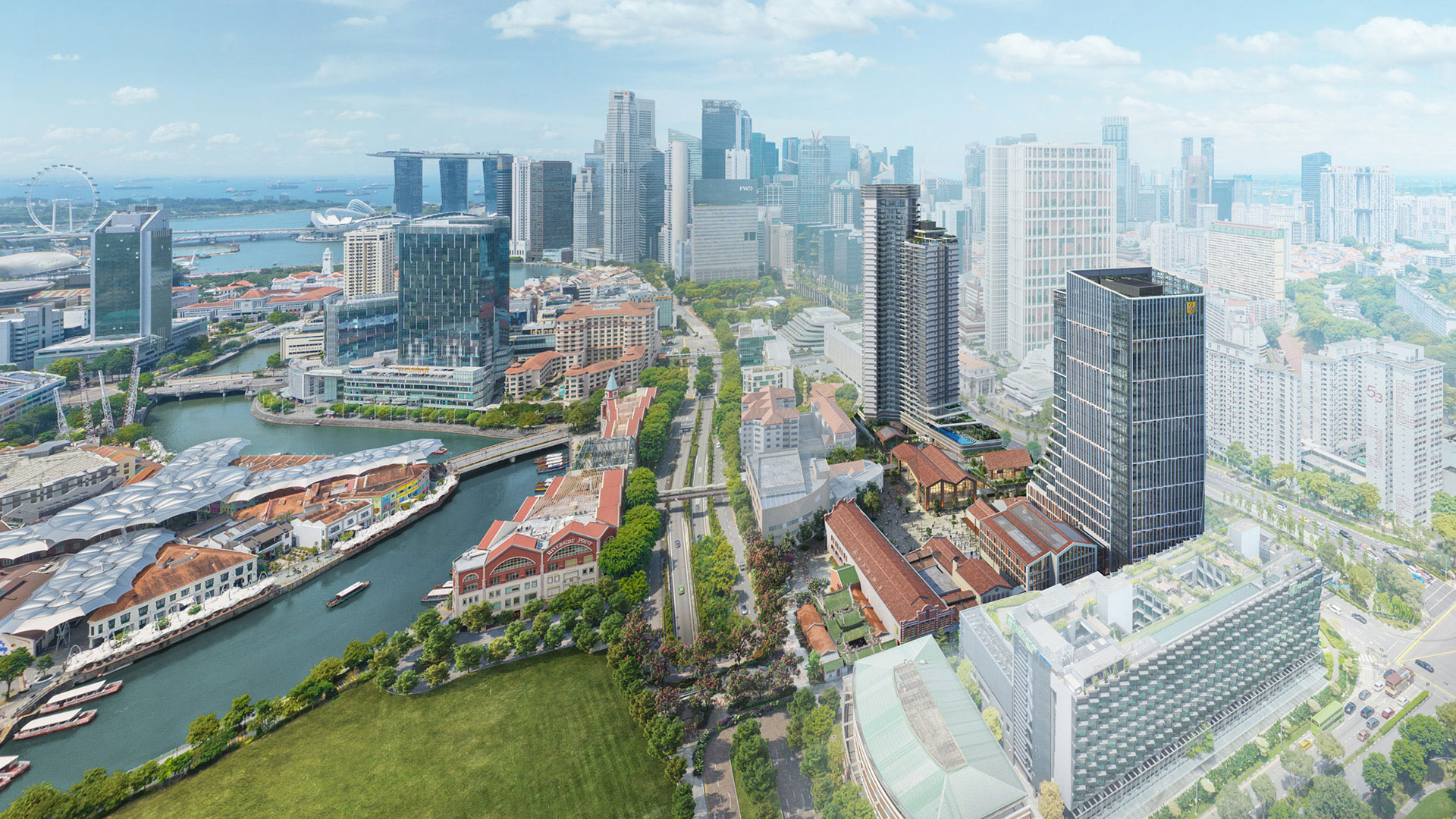
Union Square Central is set to become one of the more interesting additions to Singapore’s future office pipeline.
Located along Havelock Road and Magazine Road, at the edge of the CBD and within the Singapore River precinct, the development will replace the former Central Mall office building, Central Mall conservation buildings and Central Square. These three sites are being combined and redeveloped by City Developments Limited into Union Square, a large-scale mixed-use development comprising Grade A office space, retail and F&B, co-living accommodation and luxury residences.
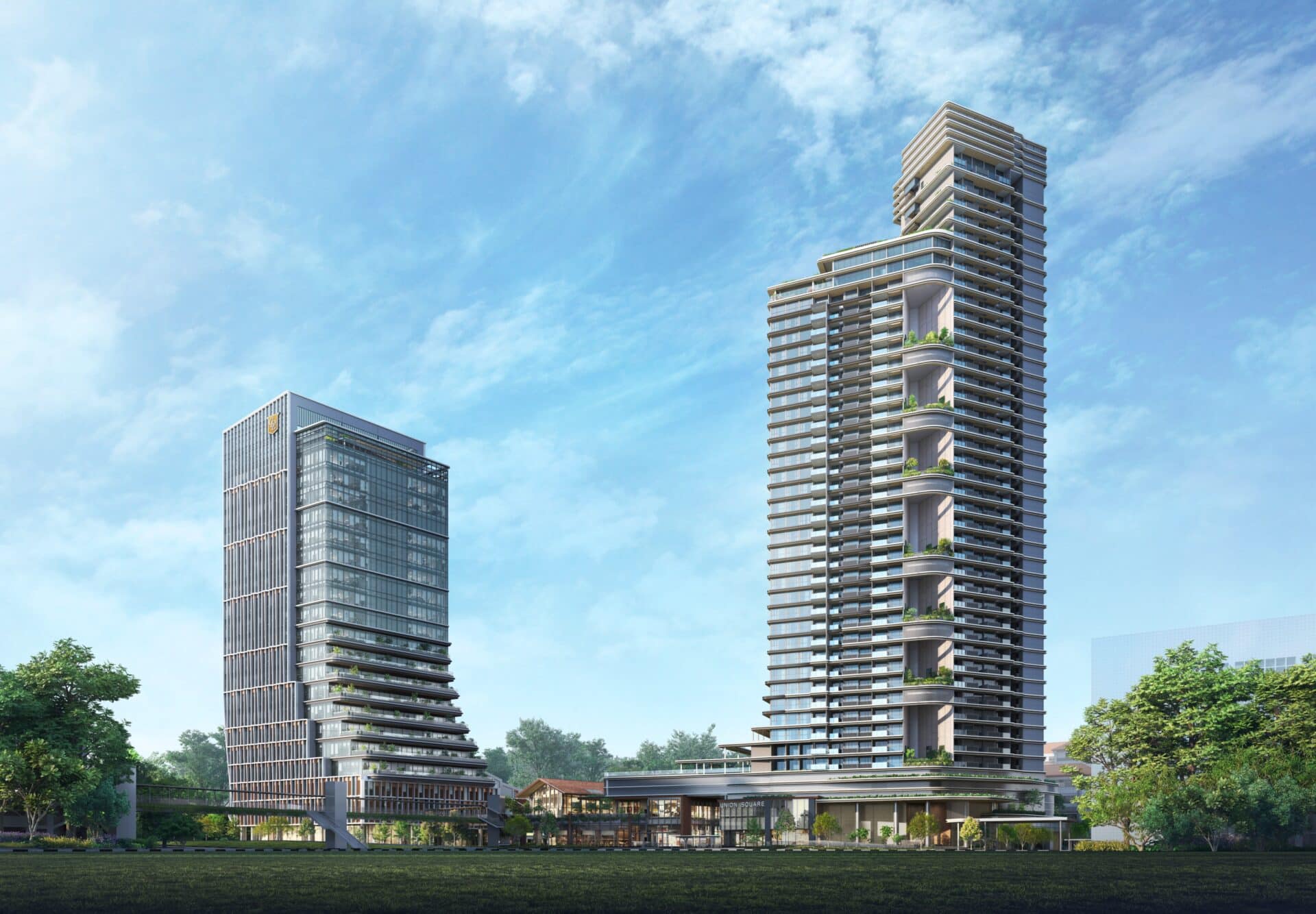
Targeted for completion in 2029, Union Square will deliver approximately 735,500 sq ft of gross floor area, following a 67% uplift secured under the Urban Redevelopment Authority’s Strategic Development Incentive Scheme. The office component, Union Square Central, will account for approximately 300,910 sq ft, or 41% of the total GFA, within a 20-storey Grade A premium office tower.
For office occupiers, the key question is not simply how much space is being added. It is what type of space, in what type of location and how it fits into a wider workplace strategy.
A new office address between the CBD and Singapore River
Union Square sits at an important transition point in the city. It is not located in the traditional core CBD in the same way as Raffles Place, Marina Bay or Shenton Way, but it is also not a suburban or decentralised office location. It occupies a fringe CBD position, close to Clarke Quay, Chinatown and Fort Canning MRT stations, with access to the North-East and Downtown Lines.
This location is likely to appeal to companies that want proximity to the CBD, but also want a workplace environment that is more closely connected to lifestyle, hospitality and public amenities.
The Singapore River precinct has long been associated with entertainment, dining and tourism, while the surrounding Havelock Road, Magazine Road and Merchant Road area has a more mixed commercial character. Union Square has the potential to strengthen the connection between these two worlds by creating a more integrated precinct, rather than a standalone office building.
This is important because office location decisions are increasingly about more than transport and rent. Companies are looking at how a building supports staff attraction, hybrid working, client engagement and the broader experience of coming into the office. In that context, the surrounding environment matters.
The office component
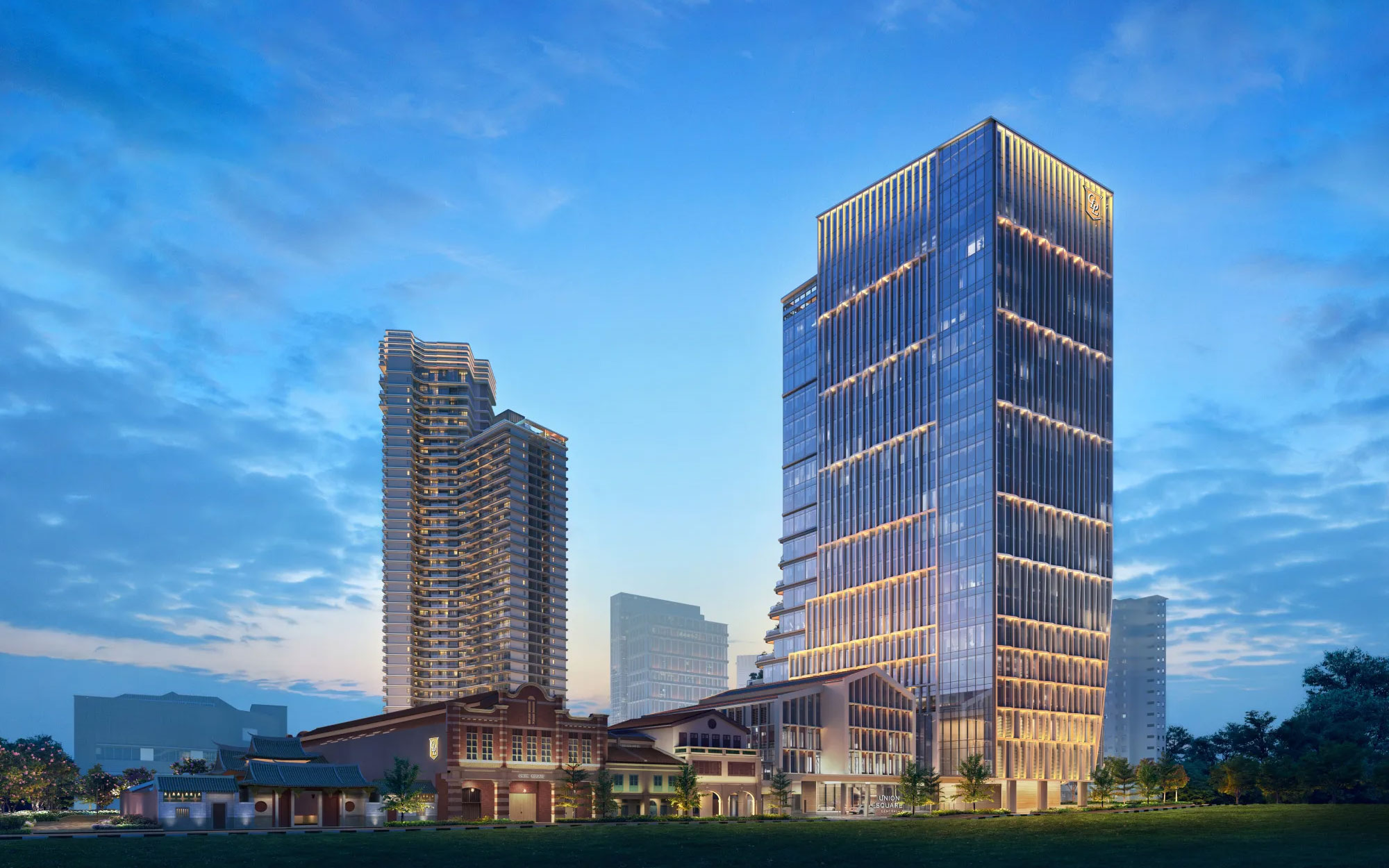
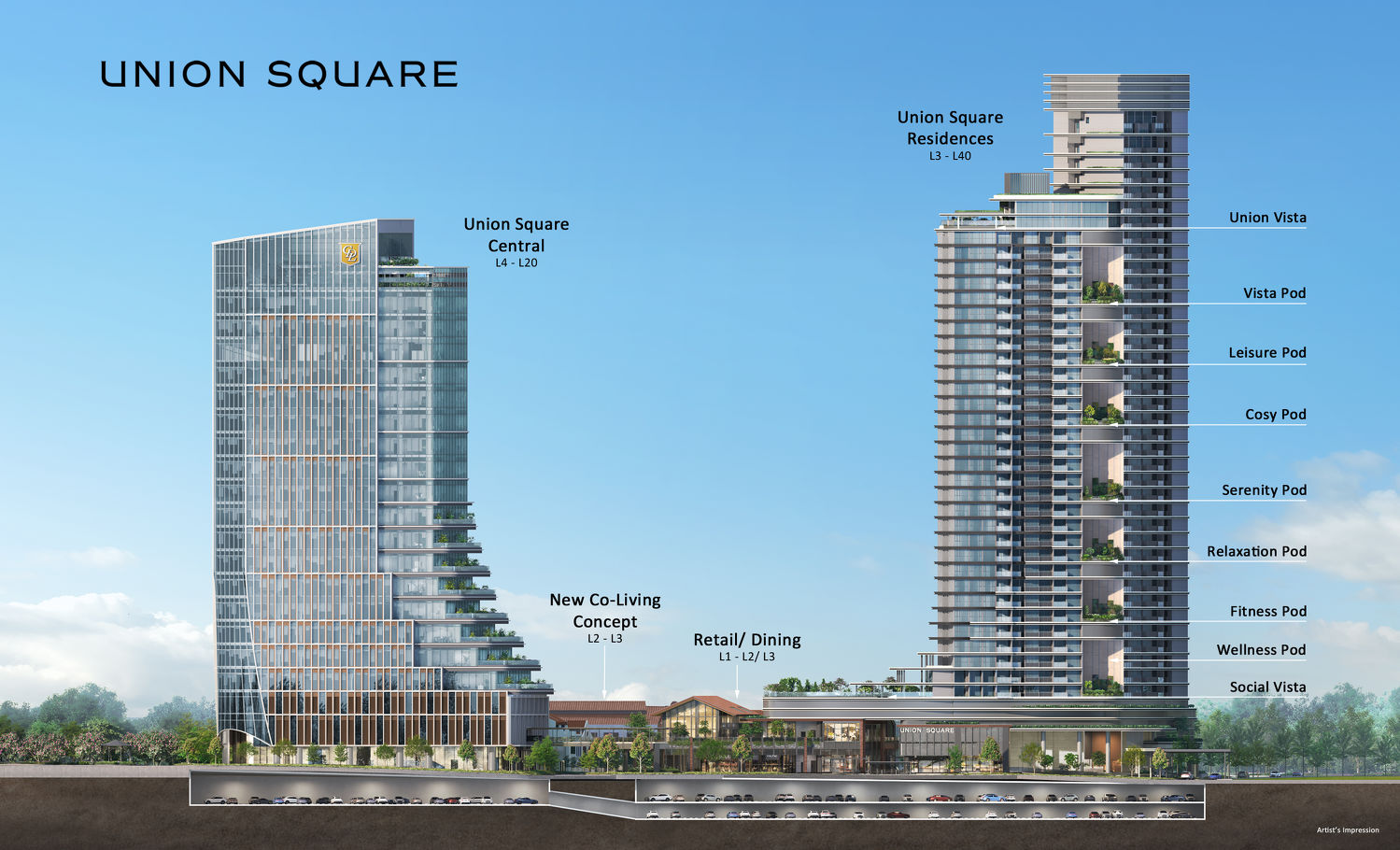
Union Square Central will form the commercial centrepiece of the wider Union Square development, with a 20-storey Grade A office tower positioned alongside a 40-storey residential block, retail and F&B space, and a co-living component with a hotel licence.
The scheme is almost evenly split between residential and office use, with 310,190 sq ft allocated to 366 residential units and 300,910 sq ft to office space. A further 75,540 sq ft will be dedicated to retail, while the co-living component will add 48,860 sq ft across 134 rooms.
This balance is significant. Union Square is not an office-only scheme. It is being planned as a mixed-use precinct where office tenants will sit within a broader environment of residential, retail, dining, hospitality-style accommodation and public spaces.
For occupiers, this could be a positive. Mixed-use developments can offer a richer mix of amenities, more activity throughout the day and a more engaging environment for employees and visitors. However, the office opportunity should still be assessed on its own merits, including floor plate efficiency, lift provision, end-of-trip facilities, arrival experience, operational costs, fit-out flexibility and the quality of the surrounding tenant mix.
Full leasing specifications will need to be reviewed once more information is available. Occupiers should avoid assuming that every new Grade A office tower offers the same type of space. Some developments are designed around very large corporate floor plates, while others suit mid-sized or more flexible occupiers. The eventual floor plate sizes, building services and commercial terms will determine where Union Square Central fits within the wider office market.
A precinct shaped by public space and conservation buildings
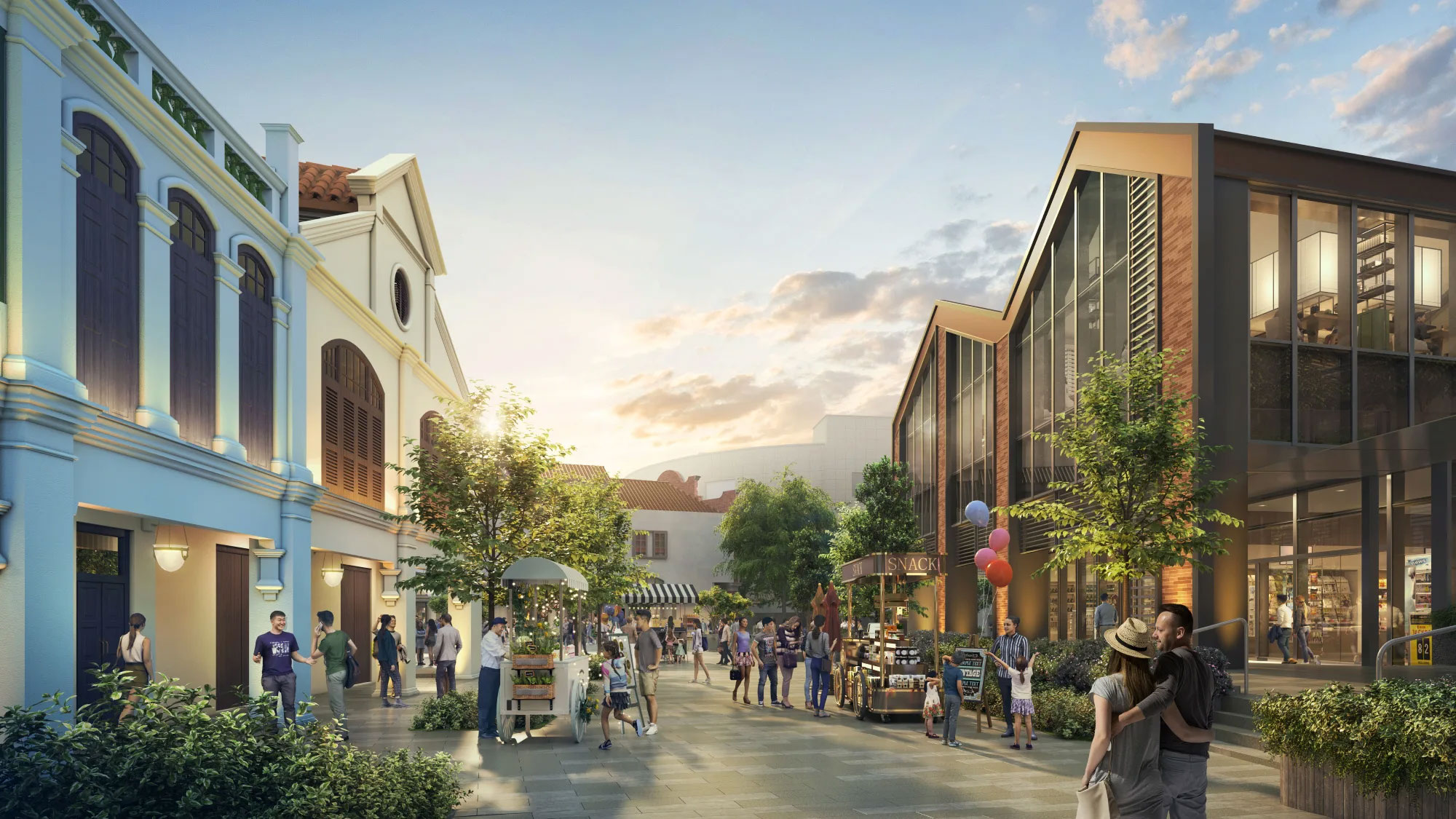
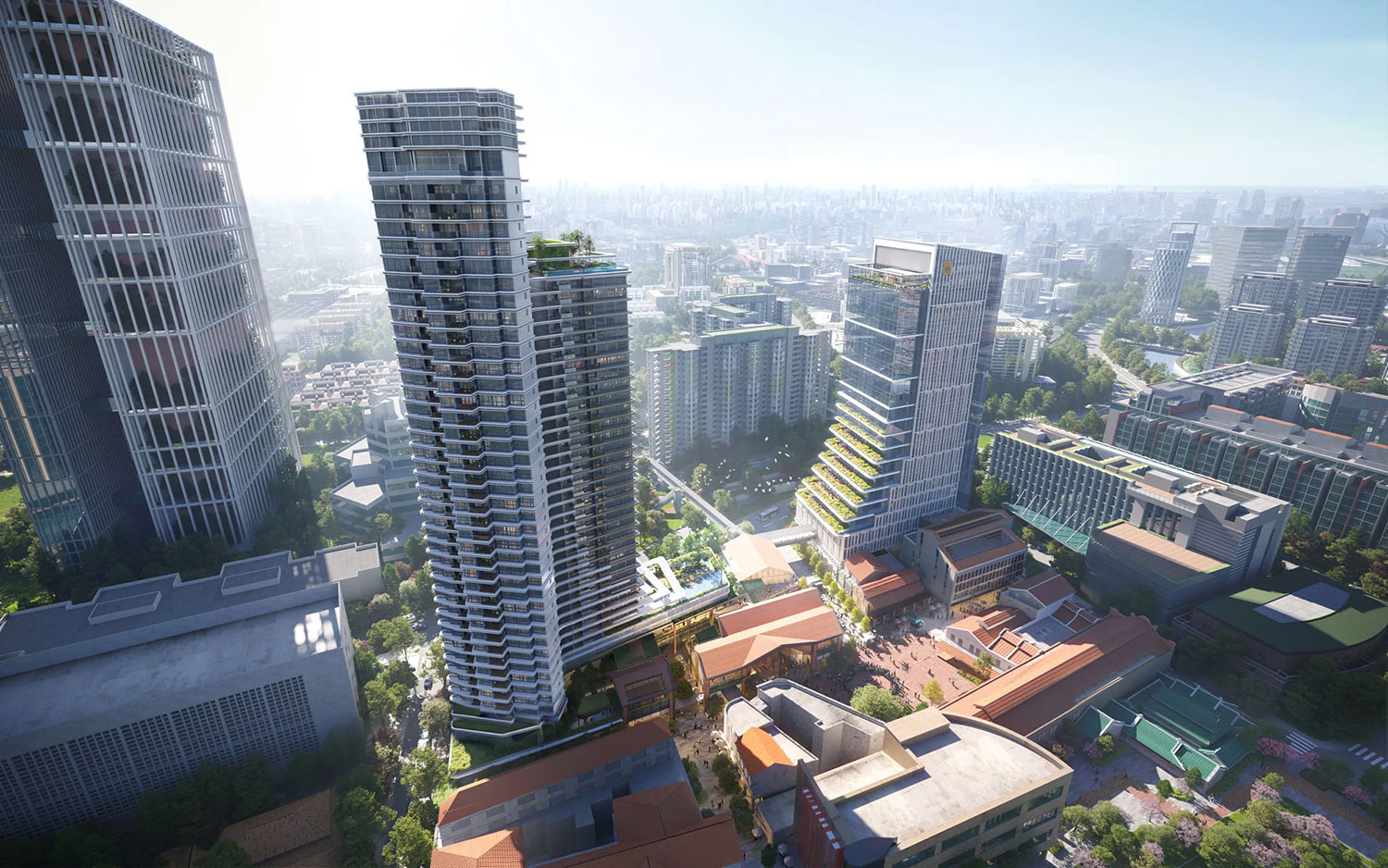
One of the more distinctive aspects of Union Square is the retention and reuse of conservation buildings on the site. These buildings are expected to house retail and F&B establishments, helping to give the development a stronger sense of place than a purely new-build scheme.
The project will also include an amphitheatre at the junction of Cumming Street and Fisher Street, referencing the traditional wayang performances that once took place in the area. Together with new plazas, landscaped terraces and public realm improvements, these features are intended to create a more active precinct rather than a conventional office-led development.
This could be one of Union Square Central’s most important differentiators.
Many office buildings offer internal amenities. Fewer are part of a wider ground-level environment that encourages movement, informal meetings and after-work activity. If executed well, this could help Union Square become more than just another office address. It could become a workplace destination.
The planned public space improvements also include partial pedestrianisation of Solomon Street and Merchant Road, better connectivity to neighbouring sites, sheltered walkways, road improvements and enhancements to an existing pedestrian overhead bridge across Upper Cross Street. These changes may appear secondary to the office tower itself, but they will influence the daily experience of tenants and visitors.
Sustainability and building performance
Union Square is also being positioned as a sustainable development. CDL has stated that both the residential and commercial components are set to achieve Green Mark Platinum Super Low Energy certification.
The development will incorporate passive design features to reduce solar heat, sustainable building systems and extensive urban greenery covering more than 70% of the site area. It will also house a District Cooling Satellite Plant connected to SP Group’s district cooling network, serving the commercial components of the development.
For occupiers, sustainability features are no longer just a branding benefit. They increasingly influence internal ESG reporting, employee expectations, operating costs and landlord-tenant discussions around energy performance.
This is particularly relevant for larger occupiers, multinational companies and businesses with regional reporting obligations. A building’s environmental credentials can be an important part of the workplace brief, especially when companies are comparing renewal options against relocation opportunities.
However, occupiers should still look beyond certification. The practical questions are how the building performs in use, how energy costs are recovered, what data can be provided to tenants and whether the building supports the company’s own sustainability commitments.
What type of tenant could Union Square Central attract?
Union Square Central is likely to appeal to a few broad categories of occupier.
The first is companies that want a Grade A environment but do not necessarily need a traditional core CBD address. These could include professional services firms, family offices, technology companies, consumer businesses, regional teams and occupiers that value CBD access but prefer a more mixed-use and lifestyle-oriented setting.
The second is tenants with 2029 or 2030 lease events who are looking at future relocation options early. For larger occupiers, the planning window for a move can be much longer than many companies expect. Strategy, search, commercial negotiation, design, fit-out and physical relocation can easily require 18 to 30 months, particularly if the move involves multiple teams or a change in workplace model.
The third is companies trying to use the office as a stronger staff engagement tool. Union Square’s retail, F&B, public space and riverfront connectivity could make it attractive to occupiers that want to improve the employee experience without moving into the most expensive core CBD buildings.
That said, occupiers should be realistic. Union Square Central is not a like-for-like substitute for every Marina Bay or Raffles Place requirement. Some companies will still need the prestige, financial district positioning, transport concentration or very large floor plate options found in the core CBD. Others may find Union Square’s fringe location and mixed-use character better aligned with their brand and workplace culture.
Timing and availability
Although Union Square Central is targeted for 2029, occupiers should not assume that all of the office space will be available close to completion.
CDL has stated in its 2025 Annual Report that a new anchor tenant has already been secured for Union Square Central and that pre-leasing commitments had reached 52%. This suggests that tenants interested in the building will need to monitor availability early, particularly if they have larger requirements or specific floor preferences.
This is a common feature of new Grade A developments. By the time a building is complete, a meaningful portion of the best space may already have been committed. Companies that wait until the final year before lease expiry can find themselves with a narrower choice of options, less negotiating leverage and insufficient time to properly compare stay-versus-go scenarios.
For occupiers with lease expiries around 2029, Union Square Central should be reviewed alongside other future supply, renewal options and fitted office alternatives. The right decision may not be to move. In some cases, renewal may still offer the best value. But the decision should be made with a clear understanding of the market, not under time pressure.
What this means for tenants
Union Square Central will be one of the more notable new office options to watch towards the end of the decade. Its appeal will come not only from the office tower itself, but from the wider precinct being created around it. For tenants, the opportunity is to secure Grade A space in a new mixed-use development that offers strong connectivity, a distinctive location and a more varied environment than a conventional office tower.The key will be early planning.
Companies with lease events in 2028, 2029 or 2030 should already be thinking about their future workplace needs. That does not mean making a decision now, but it does mean understanding future supply, likely rental levels, building specifications, fit-out timelines and how different locations support the business. Union Square Central may not suit every occupier. But for companies looking for a new workplace at the gateway to the CBD, with access to the Singapore River precinct and a broader mix of lifestyle amenities, it is likely to be an option worth watching closely.Key points
- Union Square is a 735,500 sq ft mixed-use redevelopment by CDL on the former Central Mall and Central Square sites.
- Union Square Central will comprise approximately 300,910 sq ft of Grade A office space within a 20-storey office tower.
- The development will also include retail and F&B, co-living accommodation with a hotel licence and 366 luxury residential units.
- The location offers access to the CBD fringe, Singapore River precinct and three nearby MRT stations: Clarke Quay, Chinatown and Fort Canning.
- Occupiers with lease expiries around 2029 and 2030 should monitor availability early, particularly given the level of pre-leasing already reported by CDL.
To receive future updates on Union Square Central, including leasing availability and key development milestones, contact Corporate Locations.
To share this article on LinkedIn, click here.
